Showing posts with label Buying. Show all posts

How To Sell Cheap Laptop Computer
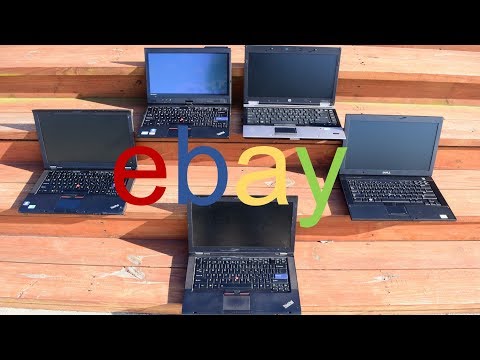
How To Sell Cheap Laptop Computer

Hello, savvy shoppers! How are you? Are you in the market for an affordable laptop that doesn't compromise on quality? Well, you're in luck because we've got just the guide for you. In this article, we'll explore the ins and outs of selling cheap laptop computers, from finding the best deals to understanding what features to look for. So, if you're ready to score a fantastic deal on a reliable laptop, please continue reading.


Choosing the Right Budget Laptop

Choosing the right budget laptop requires careful consideration of several factors. Firstly, it is important to determine your specific needs and usage requirements. Are you a student who needs a laptop for basic tasks like word processing and web browsing? Or are you a professional who requires more processing power for tasks like video editing or graphic design?

Secondly, consider the specifications of the laptop. Look for a laptop with a decent processor, sufficient RAM, and ample storage space. Additionally, pay attention to the display size and resolution as well as battery life. Lastly, read reviews and compare prices to find the best deal. Remember, a budget laptop can still offer great performance and value if you choose wisely.

So take your time, do your research, and make an informed decision.

Understanding the Market for Inexpensive Laptops

In today's tech-savvy world, the market for inexpensive laptops is booming. Understanding this market requires a keen awareness of consumer needs and preferences. These budget-friendly laptops cater to students, young professionals, and anyone looking for a reliable yet affordable computing solution.

The demand for lightweight, portable, and efficient devices is on the rise, with a focus on basic functionalities for everyday use. Additionally, with advancements in technology, inexpensive laptops now offer impressive performance, sleek designs, and long battery life. As competition intensifies, manufacturers are constantly innovating to meet the diverse needs of this expanding market, making it an exciting space to watch.

Optimizing Your Laptop for Resale

When it comes to preparing your laptop for resale, there are a few key steps you can take to ensure you get the best value for it. Start by backing up all your important data and then performing a factory reset to wipe the laptop clean. This will remove all your personal information and give the new owner a fresh start.

Next, give your laptop a thorough cleaning, both inside and out, to make it look as good as new. Address any minor issues, such as a noisy fan or a worn-out battery, to make the laptop more appealing to potential buyers. Finally, take high-quality photos of the laptop to use in your online listings.

By following these steps, you can optimize your laptop for resale and attract buyers who are willing to pay top dollar for it.

Effective Strategies for Pricing Low-Cost Laptops

When pricing low-cost laptops, it's essential to focus on value and affordability. Offering basic but functional features at a competitive price point can attract budget-conscious consumers. Implementing a cost leadership strategy by minimizing production and distribution expenses can help maintain profitability.

Leveraging economies of scale and negotiating favorable component prices with suppliers can further reduce costs. Additionally, creating bundled deals with essential accessories or software can enhance perceived value without significantly increasing the base price. Regularly monitoring market trends and adjusting prices accordingly is crucial to staying competitive.

Lastly, providing excellent customer service and warranty options can instill confidence in the product despite its lower price, fostering customer loyalty and positive word-of-mouth marketing.

Marketing Tactics for Selling Affordable Laptops

In today's fast-paced world, everyone is looking for affordable yet high-quality solutions, and the laptop market is no exception. To effectively market affordable laptops, companies must employ strategic tactics that highlight the value and benefits of these devices. One approach is to emphasize the powerful features and performance that can rival more expensive options.

By showcasing the laptops' sleek designs and cutting-edge technology, potential customers will be enticed to consider them as a viable alternative. Additionally, offering attractive discounts, bundle deals, and flexible financing options can make these laptops even more appealing. Social media campaigns, influencer collaborations, and targeted online advertisements are essential in reaching tech-savvy consumers.

Lastly, providing exceptional customer service and warranties will give buyers peace of mind and build trust in the brand. With the right marketing tactics, selling affordable laptops can be a rewarding endeavor for both companies and consumers alike.

Identifying Target Demographics for Budget Laptop Sales

Sure, I can help with that. Identifying the perfect audience for budget laptop sales is crucial for marketing success. By understanding the needs and preferences of potential buyers, businesses can tailor their strategies to reach the right demographics. Analyzing consumer behavior, income levels, and tech adoption rates is essential for pinpointing the ideal target market.

Additionally, considering factors such as educational institutions, small businesses, and remote workers can provide valuable insights. Moreover, leveraging social media and online advertising to engage with tech-savvy individuals can significantly boost sales. Ultimately, recognizing the specific demographics that are most likely to benefit from budget-friendly laptops is key to driving successful marketing campaigns and increasing overall revenue.

Enhancing the Appeal of Used Laptop Computers

As technology advances at a rapid pace, the appeal of used laptop computers is on the rise. To enhance their appeal, refurbishing and upgrading services have become increasingly popular. These services not only restore the physical appearance of the laptops but also improve their performance by installing faster processors, more memory, and larger storage options.

Additionally, offering warranties and customer support for used laptops reassures buyers about the reliability of their purchase. Embracing sustainable practices, such as promoting the reuse of electronic devices, has also contributed to the increased appeal of used laptops. Furthermore, emphasizing the environmental benefits of extending the lifespan of electronics through resale and refurbishment can attract environmentally conscious consumers.

Ultimately, enhancing the appeal of used laptop computers involves a combination of technological improvements, customer assurances, and environmental considerations.

Creating Compelling Listings for Cheap Laptops

Creating compelling listings for cheap laptops requires a strategic approach to attract potential buyers. The key is to highlight the unique selling points of the laptops while keeping the description concise and engaging. Begin by providing a brief introduction to the laptop, mentioning its brand, model, and key specifications.

Emphasize the laptop's affordability and value for money. Include details about its features, such as processor speed, RAM, storage capacity, and display size. Highlight any additional features like a backlit keyboard, long battery life, or a lightweight design. Mention any included software or accessories that add value to the purchase.

Use descriptive language to paint a picture of the laptop's performance, such as smooth multitasking, vibrant visuals, and fast booting times. Consider including customer reviews or ratings to build trust and credibility. End the listing with a strong call-to-action, encouraging potential buyers to take advantage of the affordable price and make a purchase.

Remember, the goal is to create a compelling listing that captures the attention of buyers and convinces them that the cheap laptop is a great choice. With careful crafting of words and attention to detail, you can create a listing that stands out and attracts interested buyers. Happy listing!

Negotiation Techniques for Selling Low-Priced Laptops

Negotiation techniques are crucial when selling low-priced laptops. Effective communication is key to persuading potential buyers and closing deals. Active listening allows you to understand the customer's needs and tailor your pitch accordingly. Highlighting the value of the laptop, such as its features, performance, and durability, can help overcome price objections.

Building rapport with the customer creates a positive relationship and increases the likelihood of a successful negotiation. Offering incentives, such as discounts or free accessories, can sweeten the deal and make your offer more attractive. Lastly, being flexible and open to negotiation can help find a win-win solution that satisfies both parties.

Remember, the goal is to create a mutually beneficial agreement that meets the customer's needs while maximizing your sales.

Utilizing Online Platforms for Selling Budget-Friendly Laptops

Utilizing online platforms for selling budget-friendly laptops is a convenient and efficient way to reach a wide audience of potential buyers. With the increasing popularity of e-commerce, individuals and businesses can take advantage of these platforms to showcase their affordable laptop options. Online marketplaces provide a platform for sellers to create listing pages with detailed product descriptions, specifications, and images.

This allows buyers to easily compare different laptop models, read reviews, and make informed decisions. Additionally, online platforms often offer secure payment options and reliable shipping services, ensuring a smooth and hassle-free transaction process. By leveraging these platforms, sellers can tap into a global market, expand their customer base, and increase their chances of selling their budget-friendly laptops successfully.


FOR MORE DETAILS WATCH THIS VIDEO
#Tag Artikel


Practical Tips For Buying Your New Laptop


So you want to buy a laptop but don't know where to

start. You're not alone. Buying a new laptop can present

many challenges, especially if you're unfamiliar with

laptops or notebook computers.


Over the last little while so much new laptop technology

has hit the market... Intel Duo Processors, SLI, Dual

Graphics... it can all be totally mind boggling to the average

consumer. For the first time laptop buyer understanding

all the techno jargon can be downright scary.


Mainly because a whole new generation of notebook technology

comes around every two years or less; probably much less

when you consider all the new advances made recently.

It can even be a little overwhelming even for someone

like myself who runs an online Laptop Guide and who has

a keen interest in all things laptop.


Regardless of all these fancy new improvements, devices

and notebook technology, you must remember you're buying

a new laptop for you and you alone. You must first

decide if all this new stuff is important to you?

Do you really need all this new notebook technology?


But most of all before you can consider that question you

must first figure out WHY you want a laptop? Why are you

buying a laptop? What chores or tasks do you want the

laptop to perform?


If you just want a laptop for simple web browsing and

emailing, a laptop made five years ago will do the

job nicely and cost you a heck of lot less. You really

don't need a top of the line laptop unless of course,

you're keeping up with the Jones and want the latest top

model of everything. But that's moving into Dr. Phil's

territory... lets not venture there!


So what do you need the laptop for?


Do you need a lightweight portable laptop for business

trips or meetings? Do you need a student notebook for

classes? Or do just want a desktop replacement computer

that you can easily move around in your home?


Your answer will greatly determine which type of laptop

you should buy.


In my case, I needed a desktop replacement that I could

easily move around my home and take on very infrequent

trips or vacations. Long battery life was not a major

consideration because I would mainly be using it plugged

into an electrical outlet. Besides, the laptop I wanted

would be 7 or 8 pounds and I had no intentions of lugging

that baby around over any great distance.


I work full time at home and do a lot of web design so

I needed a solid machine with a lot of RAM. I also enjoy

downloading and enjoying the occasional movie so a DVD

Multi Drive and a wide screen display were important.

High quality graphics and sound was also important for

what I needed.


* RAM


RAM is to computer what location is to real estate. RAM

or Random Access Memory is perhaps the most important

factor to consider when buying your laptop or any computer.


RAM will greatly determine the speed of your laptop or computer.

How fast it will process your tasks and graphics. You must make

sure you have enough for your needs. You can now find many laptops

pre-loaded with 1 Gig of RAM and capable of upgrading to 4 Gigs

or more.


Compared to yesterday's computers that's a lot of RAM. If you're

not into gaming, handling large video files/editing, all that

RAM is not needed but it will make your laptop run faster. Also,

remember if you're into gaming, Video RAM will be important

-- you need a top of the line (read expensive) Graphics Card

and it will increase the cost of your laptop.


Also it may be wise to buy a laptop with upgradable memory -

since new applications, multi windowed browsers, streaming video...

of the very near future may place high demand on your laptop's

RAM.


* Dual Core Processors


CPU or Computer Processing Unit is the heart of your laptop

and in this case you have Two Hearts -- Intel Centrino Duo

is the front runner in this area right now. However, AMD

is giving Intel some stiff competition in the dual core

battle with its Athlon(TM) 64 X2 dual core processor. Either

one would be a wise choice.


* Hard Drive


The amount of space or size of laptop hard drives are

steadily increasing, a 100 Gig laptop is now common.

If you don't want a lot of storage, buying a smaller

size hard drive will save you money.


Many laptop experts choose the SATA hard drive with

a high 5400 or 7200 RPM.


* Weight or Size


Perhaps the major reason you're considering buying a laptop

is its size or weight -- otherwise you're better of saving

your money and buying a desktop computer instead. A laptop is

portable, you can carry it anywhere... tuck it under your

arm and cart it to class or your next business meeting.

It is ideal for taking your information and work to wherever

you want to go. This portability is the main selling feature

of a laptop.


Obviously you must pick the best sized laptop to suit your

needs. Laptops are divided into different categories, here's

a quick rundown:


Tablet PC (smallest) Size of a paper tablet or notepad, less than 3

pounds.


Ultra Portable (small) 13" x >11" More than 1.5 inches,

more than

7 pounds and up


Pick the size that suits your purpose and use.


* Price


Laptop prices are steadily falling, it is now possible to get

a quality laptop for well under a $1000. Many are selling at the

$500 - $600 range. High quality gaming laptops offered by such

specialty laptop makers as Alienware, Rock, will still set you

back 3 to 4 grand. Ouch!


* Warranties


Don't overlook this factor, if you're buying an expensive

laptop, you might want to check out these extended warranties.

If you do a lot of traveling, you might need to purchase

insurance against thief and loss.


* Dead Pixels Was the Only Thing I Feared!


If you can check your laptop for any dead pixels. A dead pixel

will give you white spots(pixels)on your LCD display screen.

Most cases you're buying your laptop straight out of the

box, booting up and finding you have dead pixels is not

a pleasant experience. If you want to check your laptop

screen for dead pixels, just do a search for the free

'Dead Pixel Buddy' software program and run it to check

your laptop for dead pixels.


* Use The Internet For Information Or Even Purchase


I run a simple Laptop Guide on one of my sites and I also keep

a laptop blog so I am constantly using the Internet to gather

information and compare prices. You must shop around and

check out the consumer reports on the different laptop makers

and the different laptop products. You must also check out

the service records/reputation of the major brand names.


I researched all the different laptops and found the one

that met my requirements and price. I bought it in the real

world at a local Computer store mainly because I wanted to

examine the laptop's graphics and keyboard in the flesh.

However, I checked out all of the product's details beforehand

on this store's online site -- much easier than in a busy

crowded store.


Make A List


It might prove helpful to create a list of the minimum

requirements or features you want on your desired laptop:


Intel Duo

1 Gig of RAM

100 Gig Hard Drive

15 Inch Screen

4 or 5 Hours Battery Life

Burn/Write DVDs...


* Kick The Tires


Like buying anything, it is always a good idea to fully

check out your purchase. Sample the laptop's keyboard, does

typing feel comfortable? Try the touchpad, is it responsive?

Open your favorite programs and check the processing speed

of your laptop. Bring along a DVD and sample the sound

and graphics. Take note of any problems or irritations that

may pop-up, in my case it was a small right shift key but

this was so minor I knew I could get used to it and it didn't

stop me from buying my desired laptop.


* Research Your Laptop


Use the Internet to research your desired laptop, know exactly

what components it has and know what software is already preloaded.

Be careful of salespeople who will try to charge you extra for

configuring or installing programs on your laptop when these

programs may already be preloaded at the factory stage!


I settled on a Toshiba Satellite P100-SD3: it has Intel Duo,

1 Gig of RAM, 100 Gig Hard Drive, 17" widescreen TrueBrite

Display, compatible with the new Windows Vista... it meets

all my needs and I am quite pleased with my new laptop.

And I will be writing a full review after I have used it for

a couple of weeks... but that's another article.


If you consider most of the simple points and check out the factors

listed above then making your own laptop purchase will not only be

quite painless but it may even prove an enjoyable experience. Do a

little homework and you will easily find the perfect laptop for you.

Laptop Buying Guide - Ten Most Important Factors to Consider


I have faced this question several times in the past from my friends, office colleagues, relatives and also those networked with me through various social networking websites and online communities. They ask me how to choose a laptop computer that will perfectly meet up their needs. And invariably I initiate dialog by asking this question - What is the purpose of this purchase? What do you expect it to do? And based on the responses so far I have received I would like to classify the purpose of purchasing a laptop under four broad categories and I believe a laptop, being more personalized in nature in comparison to its Desktop counterpart, you can not expect it to satisfy multiple intersecting purposes of every individual at your home or work place. After all, like your Mobile Phone - a laptop is basically engineered to meet up personal needs. But anyway, as you are so determined to procure your new laptop, so, please read on to have some guideline, which have helped my friends in making a decision.


Based on the requirements of the end users we may classify needs under four different categories:


1) For High School/College students


2) For Official Use - mostly for official correspondences, business presentation with little Internet Use.


3) Mostly for accessing Internet for online communications, chatting, emailing etc.


4) Heavy duty operations - A laptop for performing heavy-duty operations - which includes processing of multi-media applications gaming, graphics design etc. - expected to be acting as a desktop replacement in the truest sense.


Irrespective of your specialized need you should be made aware about few basic concepts that constitute the backbone of any laptop, and you will also learn their effects on your choice. Here are the details:


1) Processor: Today's laptops support wide range of processors including Intel Core 2 Duo, Intel Celeron M, AMD's Turion X2, and so on. Matter of fact is that the price of a laptop largely depends on the processor it supports. As such, Intel Core 2 Duo processor series like T7200/7300/T7400/T7500 is highly recommended for a laptop to be used as a desktop replacement, or for running high-end multimedia applications, or to have a joyful gaming experience; whereas, laptop with Intel Celeron Processor is priced moderately and good for running office applications. For laptops, which feature AMD processors, are both reasonably priced and optimized for reasonable processing speed. And because of the price benefit without compromising efficiency much these are my recommendations for school/college children, and these models are also good for accessing Internet. In a nutshell, if you feel that you need a laptop with heavy-duty processing capacity then only investment in rather costly processor worth. Otherwise, there is no point in such investment.


2. Installed Memory: Besides processor, this is the second major factor, which differentiates the price and efficiency of a laptop and this is the installed memory. Most modern laptop supports DDR2 Memory, and though 1GB is good enough for processing office documents, or for running those applications required by school/ college students, and even great for browsing Internet but for Windows Vista you need to have a minimum of 2GB memory. As such it is so common to find a laptop with even up to 3 - 4 GB memory but there is no point in investing that much unless you have some reason for doing so. Also, you can almost effortlessly upgrade laptop memory anytime later.


There is a word of caution:


Check well to confirm the amount of installed memory. It has come to my notice that few retailers brand a laptop model as 'up to 4GB memory capacity', whereas actual memory physically installed in that model may be 1GB only. Obviously, you have the flexibility to add extra 3 GB memory anytime but presently what you get is 1 GB. So, you need to know the amount of memory physically installed in a laptop.


3. Hard Disk Space: Space is no more a problem unless you have planned to save all your Music/ Movie collections in your precious laptop Hard Drive. Laptops with 80GB to 160 GB space is a reasonable choice for all purposes. Though for school/college students you may consider to keep the storage capacity on the higher side to accommodate enough room for those massive sized music/movie files.


4.Screen Size: Once again this is one parameter that is to be considered with precision for laptop to be used as a replacement for desktop counterpart. You will do better going for 17" to 19" inch screen size, whereas, 14" to 16" screen size will keep the laptop portable without compromising its usability; but laptop with 13.3" or Less screen size are often referred to as Ultra Portable model obviously you can travel really light and travel freely while carrying the set with you. And laptop with screen size 10" or less, termed as Netbook, offers more flexibility in terms of portability but may not be the best option if you want to use it for presentation purpose!


5.Portability and Weight: This is something rather overlooked often while selecting a laptop model; and this is the factor that is not at all important for a laptop that is more likely to be placed on a table top for the most of its lifetime. However, if you plan to move a lot carrying the laptop with you consider models that are designated as Ultra portable. From my experience, I know, carrying 7 lbs. + weighed laptop is not a very exciting experience in the long run. Ultra portable model weighing less than 2.5 lbs is the best alternative to consider.


6.Battery: Current laptops utilize lithium ion batteries, with more recent models using the new lithium polymer technology. Typical battery life for standard laptops is two to five hours for light-duty operations. Once you have chosen a particular model, read for reviews on that model, take a scrap paper, and note down end users' feedback on battery performance if you need to rely on battery more. This is the best way to learn about battery performance of any laptop model. You may not rely on Manufacturers' claims in this issue at least.


7.Networking and Connectivity: It is desirable for every modern laptop to have support for various connectivity interfaces like Ethernet Card, built-in 802.11 a/b/g/n and Bluetooth connectivity, and to have built in modem. Besides, a laptop that features Expansion Ports like USB 2.0 ports (minimum three in number recommended), DVI, RJ-45, RJ-11, and Cable Lock Slot etc. offers better flexibility in terms of its usage.


8.Built-in components: For laptops to be used for Internet access, browsing, online networking or communications, or for playing multimedia files, or for gaming purposes the one that comes with built-in stereo speakers with microphone, and a Webcam is a good choice. In particular Webcam is very essential for online communications.


9. Graphics Card: Besides, for avid gamers, or the individual who wants to run graphics applications, it is always the best option to select a model that incorporates NVIDIA or ATI graphics card.


10. Warranty: And finally, it is desirable to invest on a laptop model that come with a legitimate warranty coverage provided by the Manufacturer.


So, my conclusion is that instead of being trapped by feature-rich expensive models, try to address your needs at the first instance and try to keep a balance between your requirements and available features without exceeding the limit of your budget while purchasing a new laptop.

Buying a New Laptop - What to Know, and What to Look For


It's that time of year again. The summer is winding to a close and that means colder weather, leaves changing their color and schools everywhere are about to open their doors. One thing that a lot of parents (and students) are dreading is that school's are beginning to require their students own laptops to use in their classes. But fear not, for I have compiled a guide that will make buying the right laptop much easier for you. And if you're not going to school this fall, this guide should still assist you in your quest for a business or personal laptop for yourself or someone in need this holiday season.


Why are you buying a new Laptop?


Maybe you're one of the parents looking to find a laptop for their child to take to school this year, or perhaps you're looking for a system that will give you a new edge at the office. The reason you are buying your laptop is going to determine what you're going to need out of the new system. If your laptop is going to be using Computer Animated Design software for example, you're going to want a more powerful processor than if you're merely using it for Word Processing or Internet based research. Are you a hardcore gamer? Do you like editing photos or creating videos? Are you a musician looking to get some better exposure? It may be best for you to jot down every possible scenario you could see yourself using the laptop before you read the next section of the guide, to be sure you're getting everything you need out of the system.


Laptops come in all shapes and sizes.


Size does matter.


This is a feature that a lot of people overlook when buying a laptop, but the size and physical features of the laptop are arguably one of the most important. Where the processor, amount of ram, and hard drive can be upgraded and replaced as needed, features like the size of the laptop, the placement of its various input/output ports and it's weight are all things that you're realistically going to be stuck with after your purchase it. Some things to ask yourself are:


How large of a screen am I going to need? Am I going to be carrying this laptop around a lot? How many peripherals are going to be attached to the laptop? Am I going to miss not having the NUMPAD on my keyboard?


The size of the screen is going to directly affect the size of the laptop, so this question is important. If you are buying this laptop to edit photos, create videos, play games or watch movies and television then you'll likely want a large screen. Keep in mind that large screen laptops are heavier, and therefor if you're going to be crossing a large campus on a daily basis you'll need to consider that as well. The number of peripherals you'll be attaching to the laptop also helps narrow down what you'll be using it for. The most important consideration is the number of USB ports you'll have, as most accessories and devices connect to a laptop using these ports. A printer that isn't wireless, a drawing tablet, a wired or wireless mouse and a USB storage drive are all examples of devices that connect via USB. If you intend on connecting your laptop up to a monitor at any given time you'll want to consider the Output connection on the laptop as well. Finally, one of the most overlooked features of a laptop is the presence or absence of the NUMPAD on the keyboard. The NUMPAD is the 16 button portion beside your arrow keys that sort of resembles a telephone. Though, it is possible to purchase a USB powered external NUMPAD for a laptop, if you're used to having one, it's best to have it attached to the laptop itself.


What makes a good Laptop?


Now that you have an idea about what you want your laptop to look like on the outside, it's time to consider what you'd like to see on the inside. If you're buying this laptop merely to use programs like Microsoft Office, an internet browser and iTunes then you're not going to need a whole lot of power from your system. Laptops on the retail market these days come equipped with Windows 7 as an operating system, and unlike their Vista counterparts a couple years back will come designed to handle running the operating system smoothly. That being said, a good benchmark to set for your system will be 4GB of RAM; preferably DDR3, A quality dual core processor (avoid the Intel Celeron series for example), and then a hard drive based off how much you plan to store on your computer. Typically hard drives from 250 - 500GB are the most commonly found on lower to mid ranged laptops, and that should be more than sufficient storage space.


If your plan is to use more intensive programs, such as Graphic Design software, Music editing software, or anything else that will create an intensive load on your system you'll want to take a closer look at your Processor. A processor that boasts dynamic performance enhancement, such as the Multithreading feature offered in the Intel i series of processors are a good choice for this. The cores of the i3-i7 processors are designed to divide tasks up into threads within each processing core, allowing your system to think it has more cores to work with, the end result being that it can force a little extra power out of your system in a pinch. Another handy feature to watch for is the size of your L2 and L3 cache. The larger the cache, the more your system is able to do without slowing itself down to access more distant memory sources, and that means quicker response times to whatever you need to access.


If you're buying this system specifically for gaming, or for High Definition multimedia or 3D modeling, you'll want to consider the Graphics Card your system will come with. For the most part, a 1GB of video memory in the graphics card should be more than powerful enough to handle whatever your needs are, but it would be wise to check the specific requirements of the game or software you're installing, and be sure that the features you need are included in the design of the card.


Finally, the battery life of the laptop could be important as well. If you plan on using the laptop in a lot of places where there are no power sources, you'll want a laptop with a longer than average battery life. And considering the average battery life of a laptop varies from 2-4 hours, this can be a very important decision for the commuting over-achiever or social butterfly.


The Hard Drive of a Laptop stores all your data.


Where to go from here?


So you've finally decided on a laptop that fits all your needs. It's the right size, has the NUMPAD on the side, doesn't weight too much and it's a sweet shade of charcoal gray. Now that you're ready to dish out on the system, it's time to consider everything else you're going to need to work at maximum efficiency.


For software, consider again what you'll be doing with your laptop. If you're ever planning to take it online by any capacity (and who isn't, these days) then you're going to want a reputable Antivirus program. One of the best right now is from a company called Kaspersky. As of this writing, it has been found to locate and quarantine/remove the largest library of malicious software of any Antivirus in the retail market. The internet security package also includes metrics to protect your personal identity online from online phishers. This can be important if you access your bank information or log into sensitive company assets over the internet.


Another must have for business and school is the Microsoft Office suite. Microsoft Office comes in many packages, and the one that is right for you depends on what you need for work. Most users will find the Home and Student offering to be enough, featuring Microsoft Word, PowerPoint, and Excel. This allows you to create professional documents and resume's, organize slide show presentations, and create powerful spreadsheets. Other popular programs included in other Office suites are Outlook, a program used to organize e-mail in ways most internet services can not, and Access, a program that can create Databases for organizing and storing information on anything from sales records to your Elvis Presley collectibles. Make sure when you're purchasing a copy of Microsoft Office that it has every program you need to be successful.


Graphic designers or photography buffs will want to get their hands on photo editing software such as Adobe Photoshop. A music producer will need a program to allow them to record, edit and store music. Gamers will need to shell out for their latest digital fix, and Web Designers will likely want to purchase a license for Macromedia Flash or Adobe Dreamweaver.


What about Accessories?


So now you have a laptop and software to go with it. What else could you possibly need? Well for starters, what do you plan on carrying it in? Laptop bags come in several varieties. Slipcases for storing your system in a backpack or briefcase, messenger bags for carrying your laptop and a couple needed accessories, and larger briefcase style bags to carry your laptop along with work materials. They come in all sizes to accommodate a laptop of any size, so be sure the bag you're buying will hold the 17" wide screen your purchased.


Another accessory to add to your list is a wireless mouse. Most people (myself included) do not like the touch pad that comes with your laptop, so by plugging in a receiver into a USB port of your laptop you can replace that dodgy pad with a traditional mouse, AND you don't have to untangle 4 feet of wire first, either. Other input peripherals include a NUMPAD if your laptop keyboard doesn't have one, or a Tablet for sketching or signing documents.


If you plan on listening to a lot of music, voice chatting, or even just taking verbal notes for your to do list, you may want to consider purchasing a USB Headphone/Microphone combination. If you want to add video conferencing, or creating video blogs to that list you'll want to purchase a web camera as well. (keep in mind that many laptops come with a camera and/or mic built into the screen). If you're storing a large amount of data, or storing sensitive data you can't afford to lose, invest in an external hard drive. They store at least as much data as your laptop and can even back up your entire system on a scheduled basis. Plus, they're simple to install and can even be portable, to take with you wherever you go.


If you're going to be printing a lot and working in different areas of the house, a wireless printer is a good addition to any laptop purchase. They're no longer more expensive than their wired counterparts, and the added range and flexibility more than make up for the money spent. Make sure you weigh the cost of the printer with the cost and yield of it's ink cartridges. Typically the cheaper the printer, the costlier the ink to sustain it.


Finally, if you're not yet wireless at your home, there's no better time than now. Your laptop will come with a wireless adapter built right into it, so all you'll need to pick up is a Wireless Router. For the cost of technology, spend the extra $10 or so dollars and opt for a Wireless N system. It has a faster wireless download speed and a much larger signal range, allowing you to update your Facebook status from the bedroom, or destroy your best friends Town Hall from the comfort of your lawn chair. Keep in mind that just about any wireless router you purchase comes with at least 4 Ethernet ports so your wired desktop and/or gaming consoles can still be connected to the network as well.


Most of your accessories will connect to your laptop using a USB connection.


The Router Goes Where?


So now you've finally made your big shopping list of everything you're going to need to get back to school in style this year, and looking at the list you're starting to wonder how you're going to get it all installed, set up and be ready in time for the start of your classes. It's time for you to consider the last step of buying a new system...


Any retailers worth their salt can offer you assistance in setting up a new laptop. They'll power it on, install your hardware titles, install your printer's drivers and in some cases they can even go as far as driving to your home and setting up your wireless network. If the idea of configuring your home computer, new laptop, Xbox 360 and Ipod Touch to a single network frightens you, it may save you hours of frustration to pay and have it all professional installed and configured.


One last thing to consider as well is protecting your investment. If you're starting from scratch, you're likely spending close to a thousand dollars on your new set up, and in some cases even more than that. And though the idea of adding another expense to the already daunting list you're prepared to shell out may seem like a bad idea, the next consideration can literally save your butt in a pinch. What I'm talking about is the dreaded Extended Service Plan. Unfortunately I think that used car salesman and and commission based Electronic stores have given ESP's a bad rap. The Extended Service Plan actually exists to protect your investment from the limited warranty provided from the major electronic manufacturers.


The One Year Limited Warranty provided from companies like HP or Dell cover manufacturer's defects only. Meaning that unless the issue can be traced directly to being a flaw in the manufacturing of the product, HP or Dell will deny you any assistance or monetary compensation for the system. And believe me, they will do anything to convince you that they didn't mess up. What does that mean for you? Well, without assistance from an Extended Warranty, odds are good that you're stuck with that laptop with the dead hard drive and faulty screen.


The extended warranty however, will protect your Laptop against any and all damages and defects incurred during the life of the warranty, typically between 2-4 years. This means that if a year and a half down the road the cheap hard drive that HP placed in your laptop dies out, you can call the company that you purchased your warranty from and either get your laptop repaired, get it replaced, or get your money back (less the money spent purchasing the warranty). And in most cases, the cost of the warranty is less than even the cost of buying the replacement part, let alone the cost to have it replaced.

Buy a laptop, you can use a personal assistant

Be not surprised, but buying a laptop can even more difficult than buying a desktop computer. Buy a computer is very easy. Laptops are very personal things, because something that you carry it around with you and sometimes act as more than just a computer for you is to work. You become a companion! Therefore find and select the right laptop can be very difficult.


Hard core computer gamers or people the their laptops for design or video require production-more than I read just about buying used laptops. For conventional laptop users, it is necessary to digest here something for you.


The price of laptops will vary drastically from brand to brand. $500 Costs some laptops, while some laptops you can $6,000 cost. Some beginners (i.e. Basic notebooks) can be purchased for $600 to $900. If you access a laptop from eBay or other discount or Dropshipping websites, you may receive a mid range laptop for far less than that.


The description and specifications for the laptop is very, very important for basic laptop users. If you are not sure to make you and your friends for advice as possible you have a questions to buy good laptop for the lowest price. You should receive a laptop that comes with at least 512 megabytes of memory. The amount of memory ensures that your laptop multiple programs smoothly runs. As a hard disk, invest a hard drive for your laptop as large as you can afford. Another thing to look at you before you invest into the laptop is to find out how many USB ports, the laptop has. Most laptops have at least 2 USB ports, the more the better. If you use a camera or thumb drive (disk key), this is the insertion of the cable - USB ports. Don't want to do you have the USB cable for your printer and mouse removing every time, when you try to save images from your camera to your laptop! Some laptops have slots for camera memory cards, for example your compact flash cards.


If you are interested on a Windows-based laptop, always remember, safety should from your laptop up on your priority list. Windows XP SP2 is ideal, because it comes with anti-spyware, anti-spam and antivirus programs, Antipopups. Some laptop dealers can offer cheap or free programs you, that you can install on your laptop in the laptop as a second layer of protection.


Other factors to consider when shopping for laptops are the screen size, battery life, the processor of laptop, screen and keyboard, wi-fi networks, size and weight of the laptop.