Showing posts with label Cheap. Show all posts

Which Is The Best Cheap Gaming Laptop

Which Is The Best Cheap Gaming Laptop

Hello, gaming enthusiasts! How are you? If you're on the hunt for an affordable gaming laptop that doesn't compromise on performance, you've come to the right place. The world of gaming laptops is vast and ever-changing, with new models hitting the market regularly. With so many options out there, it can be overwhelming to find the perfect balance between price and performance. Fear not, for we're here to help you navigate through the sea of options and find the best cheap gaming laptop that suits your needs. So, greetings, and please continue reading to uncover the top contenders in the affordable gaming laptop arena.


"Top 10 Affordable Gaming Laptops"

Here is a paragraph about the "Top 10 Affordable Gaming Laptops":Looking for a gaming laptop that won't break the bank? Look no further! We've compiled a list of the top 10 affordable gaming laptops that offer impressive performance without costing a fortune.

These laptops are perfect for casual gamers or those on a budget who still want to enjoy a smooth gaming experience. With powerful processors, ample RAM, and dedicated graphics cards, these laptops can handle the latest games without sacrificing performance.

Whether you're into fast-paced action games or immersive open-world adventures, these affordable gaming laptops will deliver the performance you need without emptying your wallet. Get ready to level up your gaming experience with these budget-friendly options!

"Budget-Friendly Gaming Laptops: The Ultimate Guide"

Looking for a gaming laptop that won't break the bank? Look no further. Our ultimate guide to budget-friendly gaming laptops has got you covered. We've scoured the market to bring you top-notch options that deliver impressive performance without the hefty price tag.

From sleek designs to powerful hardware, these laptops are ready to elevate your gaming experience without emptying your wallet. Whether you're a casual gamer or a dedicated enthusiast, our guide will help you find the perfect balance of performance and affordability.

Don't compromise on quality – dive into the world of budget-friendly gaming laptops and unleash your gaming potential without the financial strain.

"Comparing the Best Cheap Gaming Laptops"

When it comes to gaming, finding the best bang for your buck is essential. In the world of affordable gaming laptops, the competition is fierce, and finding the right balance of performance, price, and features is crucial.

Whether it's the latest AAA titles or competitive multiplayer games, gamers are always on the lookout for budget-friendly options that don't compromise on quality. With a myriad of options available, from sleek designs to powerful hardware, the search for the best cheap gaming laptop can be overwhelming.

From stunning visuals to smooth gameplay, these laptops aim to deliver an immersive gaming experience without breaking the bank. Let's dive into the world of affordable gaming laptops and explore the top contenders in this competitive arena.

"Affordable Gaming Laptops: A Buyer's Guide"

Looking for an affordable gaming laptop that doesn't compromise on performance? Look no further. When it comes to choosing the right gaming laptop, there are a few key factors to consider. First, prioritize the graphics card.

A powerful GPU ensures smooth gameplay and better visuals. Second, focus on the processor. A fast CPU is essential for handling the demands of modern games. Additionally, pay attention to the display quality, storage capacity, and cooling system.

Thankfully, there are budget-friendly options that offer impressive specs. Brands like Acer, ASUS, and Dell have great entry-level gaming laptops that cater to both casual and serious gamers. By understanding your priorities and budget, you can find the perfect gaming laptop that suits your needs without breaking the bank.

"Finding the Perfect Gaming Laptop on a Budget"

Sure, I can do that. Finding the perfect gaming laptop on a budget can be a challenging task. With the wide range of options available, it's important to consider key factors such as the processor, graphics card, RAM, and storage capacity.

While high-end gaming laptops offer top-of-the-line performance, they often come with a hefty price tag. However, with careful research and comparison, it's possible to find a budget-friendly gaming laptop that meets your needs.

Look for laptops with mid-range processors like Intel Core i5 or AMD Ryzen 5, dedicated graphics cards such as NVIDIA GTX 1650, at least 8GB of RAM, and SSD storage for faster load times. Additionally, consider the display quality and battery life to ensure an enjoyable gaming experience without breaking the bank.

"The Best Gaming Laptops Under a Limited Budget"

When it comes to gaming laptops, finding the perfect balance between performance and affordability can be a challenge. But fear not, as we have compiled a list of the best gaming laptops that won't break the bank.

These powerful machines boast impressive specs, including high-refresh rate displays, dedicated graphics cards, and fast processors, ensuring smooth gameplay without compromising your limited budget.

With sleek designs and lightweight bodies, these gaming laptops are not only budget-friendly but also portable. Get ready to immerse yourself in the world of gaming without burning a hole in your pocket.

"Budget Gaming Laptops: Features to Consider"

Budget gaming laptops are popular among gamers looking for affordable yet capable machines. When considering a budget gaming laptop, key features to prioritize include the processor, graphics card, RAM, storage, and display.

A powerful processor, such as an Intel Core i5 or AMD Ryzen 5, is essential for smooth gameplay. Additionally, a dedicated graphics card, such as NVIDIA GeForce GTX or AMD Radeon, is crucial for handling graphics-intensive games.

A minimum of 8GB RAM is recommended, while SSD storage provides faster load times. The display should offer at least a Full HD resolution with a high refresh rate for a more immersive gaming experience.

Prioritizing these features ensures that budget gaming laptops can deliver satisfactory gaming performance without breaking the bank.

"Choosing the Right Cheap Gaming Laptop for You"

When it comes to choosing the right cheap gaming laptop, there are a few key factors to consider. First and foremost, you'll want to assess the laptop's specifications, such as the processor, graphics card, and RAM.

These components play a crucial role in determining the laptop's gaming performance. Additionally, it's important to consider the laptop's display quality, as a high-resolution screen can greatly enhance your gaming experience.

Another aspect to keep in mind is the laptop's cooling system, as gaming can put a significant strain on the device's temperature. Lastly, don't forget to consider the laptop's portability and battery life, especially if you plan on gaming on the go.

By carefully evaluating these factors, you can find a cheap gaming laptop that meets your gaming needs without breaking the bank.

"Affordable Gaming Laptops: Performance vs. Price"

Affordable gaming laptops offer a compelling choice for gamers who seek performance without breaking the bank. When it comes to finding the perfect balance between performance and price, gamers often face a tough decision.

Should they invest in a high-performance laptop with all the latest features, or opt for a more budget-friendly option that may sacrifice some performance? The answer lies in understanding one's gaming needs and budget constraints.

While high-end gaming laptops boast powerful processors, dedicated graphics cards, and high refresh rate displays, they often come with a hefty price tag. On the other hand, budget gaming laptops may not offer the same level of performance but can still provide an enjoyable gaming experience for casual gamers.

Ultimately, it comes down to personal preferences and priorities. So, whether you're a hardcore gamer or a casual player, affordable gaming laptops can be a viable option that allows you to enjoy your favorite games without breaking the bank.

"Exploring the World of Budget Gaming Laptops"

Budget gaming laptops have revolutionized the gaming industry, making high-quality gaming accessible to a wider audience. These affordable machines offer impressive performance and graphics capabilities, allowing gamers to immerse themselves in their favorite virtual worlds without breaking the bank.

With advancements in technology, budget gaming laptops now come equipped with powerful processors, ample storage, and dedicated graphics cards, ensuring smooth gameplay and stunning visuals. From sleek designs to customizable RGB keyboards, budget gaming laptops offer a stylish and affordable option for gamers looking to elevate their gaming experience.

Whether you're a casual gamer or a hardcore enthusiast, exploring the world of budget gaming laptops will open doors to endless gaming possibilities without compromising on performance or budget.


FOR MORE DETAILS WATCH THIS VIDEO
#Tag Artikel


Gaming Laptop Cheap But Good

Gaming Laptop Cheap But Good

Hello, gaming enthusiasts! How are you? If you're on the hunt for a gaming laptop that's both affordable and high-performing, then you've come to the right place. In this article, we will explore the world of gaming laptops and reveal some hidden gems that offer exceptional value for your money. Whether you're a casual gamer or a hardcore enthusiast, we've got you covered. So, without further ado, greetings and please continue reading to discover the best cheap but good gaming laptops on the market.


Best Budget Gaming Laptops

When it comes to budget gaming laptops, there are several options that offer great performance without breaking the bank. One of the top contenders in this category is the Acer Nitro 5. Packed with an Intel Core i5 processor and NVIDIA GeForce GTX 1650 graphics card, it can handle demanding games with ease.

Another solid choice is the Lenovo Legion Y530, featuring an Intel Core i7 processor and NVIDIA GeForce GTX 1050 Ti graphics card. Both laptops offer a decent amount of RAM and storage space, ensuring smooth gameplay and quick loading times. For those on a tighter budget, the Dell G3 15 is worth considering, with its Intel Core i5 processor and NVIDIA GeForce GTX 1050 graphics card.

Overall, these budget gaming laptops provide a great gaming experience without burning a hole in your pocket.

Top Affordable Gaming Laptop Picks

Looking for an affordable gaming laptop that doesn't compromise on performance? Look no further. The Acer Nitro 5 is a standout choice, boasting a powerful processor and dedicated graphics card at a budget-friendly price. If portability is a priority, consider the ASUS TUF Gaming FX505. Its sleek design and impressive battery life make it perfect for gaming on the go.

For those who value customization, the Dell G3 offers a range of configuration options to suit your gaming needs without breaking the bank. Lastly, the HP Pavilion Gaming Laptop delivers solid gaming performance and a vibrant display without costing a fortune. These top picks prove that you don't need to empty your wallet to enjoy an immersive gaming experience.

Finding Quality Gaming Laptops on a Budget

Finding Quality Gaming Laptops on a Budget can be a challenging task. With the ever-increasing demand for powerful gaming machines, it's easy to assume that quality comes at a high price. However, there are ways to find a gaming laptop that meets your needs without breaking the bank.Firstly, consider the specifications you require for your gaming experience.

Look for a laptop with a dedicated graphics card, preferably from a reputable manufacturer like NVIDIA or AMD. A powerful processor, such as an Intel Core i5 or i7, is also crucial for smooth gameplay. Additionally, ensure that the laptop has enough RAM to handle resource-intensive games.Next, search for deals and discounts.

Many online retailers offer special promotions or sales events where you can find gaming laptops at reduced prices. Keep an eye out for seasonal sales, such as Black Friday or Cyber Monday, as they often offer significant discounts on electronics.Consider buying refurbished or second-hand laptops. These can be a cost-effective option, especially if you're on a tight budget.

Just make sure to purchase from a trusted seller and thoroughly check the laptop's condition before making a decision.Lastly, read reviews and compare different models. Look for reputable tech websites or forums where gamers discuss their experiences with various laptops. Pay attention to factors like build quality, cooling system, and battery life, as these can greatly affect your overall gaming experience.

In conclusion, finding a quality gaming laptop on a budget is possible with the right approach. Prioritize the specifications you need, search for deals and discounts, consider refurbished options, and do your research. By following these steps, you can find a gaming laptop that offers an enjoyable gaming experience without breaking the bank.

Budget-Friendly Gaming Laptops for Gamers

Budget-Friendly Gaming Laptops for Gamers: Looking for an affordable gaming laptop without compromising on performance? Good news! We've got you covered. Introducing a range of budget-friendly gaming laptops that are sure to satisfy your gaming needs without breaking the bank. These laptops are equipped with powerful processors, ample RAM, and dedicated graphics cards, ensuring smooth gameplay and stunning visuals.

With sleek designs and lightweight builds, they are portable enough to take on the go. Whether you're a casual gamer or a hardcore enthusiast, these laptops offer impressive gaming experiences at an affordable price. Upgrade your gaming setup without emptying your wallet with these budget-friendly gaming laptops.

Get ready to dive into immersive worlds and conquer virtual challenges without compromising your budget.

Gaming Laptops That Won't Break the Bank

Gaming laptops are a popular choice for those who want to enjoy high-performance gaming on the go without breaking the bank. These laptops offer a balance of power, portability, and affordability, making them an attractive option for gamers. When choosing a gaming laptop that won't break the bank, it's important to consider key factors such as the processor, graphics card, RAM, storage, and display quality.

Additionally, looking for laptops with efficient cooling systems and long battery life can enhance the gaming experience. Some popular budget-friendly gaming laptop brands include Acer, ASUS, Dell, HP, and Lenovo. These brands offer a range of options with competitive specifications at affordable prices, making them accessible to a wide range of gamers.

Overall, gaming laptops that won't break the bank can provide an excellent gaming experience without the hefty price tag, allowing gamers to enjoy their favorite titles without compromising on performance or portability.

Great Value Gaming Laptops for Every Budget

Looking for a gaming laptop that won't break the bank? You're in luck! There are great options available for every budget. Whether you're a casual gamer or a hardcore enthusiast, there's a gaming laptop out there for you. Budget-friendly laptops like the Acer Nitro 5 and Dell G3 offer solid gaming performance without costing a fortune.

If you're willing to invest a bit more, the ASUS ROG Zephyrus G14 and MSI GS66 Stealth deliver high-end features at a reasonable price. These laptops combine powerful hardware with affordable price tags, making them great value options for gamers on a budget. So, don't let the price tag hold you back – dive into the world of gaming with a laptop that fits your budget.

Affordable Gaming Laptops with Solid Performance

Affordable gaming laptops with solid performance are becoming increasingly popular among gamers and tech enthusiasts. These laptops offer a balance between price and functionality, providing a cost-effective solution for those looking to enjoy high-quality gaming experiences without breaking the bank.

With advancements in technology, budget-friendly gaming laptops now boast impressive specifications, including powerful processors, dedicated graphics cards, and ample RAM, delivering smooth gameplay and multitasking capabilities. Additionally, these laptops often feature sleek designs and vibrant displays, enhancing the overall gaming experience.

Whether it's for casual gaming or competitive play, affordable gaming laptops with solid performance are making it more accessible for a wider audience to indulge in the world of gaming without compromising on quality.

The Best Cheap Gaming Laptops for Casual Gamers

Looking for an affordable gaming laptop to enjoy your favorite games? Look no further! We have compiled a list of the best cheap gaming laptops for casual gamers. These laptops offer excellent performance and graphics without breaking the bank. Equipped with powerful processors and dedicated graphics cards, they can handle popular games smoothly.

With their sleek designs and portable form factors, you can easily take them on the go. Whether you're into RPGs, first-person shooters, or strategy games, these gaming laptops will provide you with an immersive gaming experience. Don't compromise on quality or your budget. Get the best value for your money with these affordable gaming laptops.

Enjoy gaming like never before!

Gaming Laptops Under $1000: Affordable and Powerful

Gaming laptops have become increasingly popular among gamers due to their portability and high-performance capabilities. With advancements in technology, it is now possible to find affordable gaming laptops that offer powerful specifications without breaking the bank. These laptops, priced under $1000, provide a great gaming experience without compromising on performance.

One key aspect to consider when looking for a gaming laptop under $1000 is the processor. A powerful processor ensures smooth gameplay and fast loading times. Many laptops in this price range come equipped with Intel Core i5 or i7 processors, which are capable of handling demanding games and multitasking efficiently.

Another important factor to consider is the graphics card. Gaming laptops under $1000 often feature dedicated graphics cards from reputable brands such as NVIDIA or AMD. These cards provide exceptional graphics performance and allow gamers to enjoy their favorite titles with stunning visuals and smooth frame rates.

In addition to the processor and graphics card, the amount of RAM is also crucial for optimal gaming performance. Most gaming laptops in the sub-$1000 range offer at least 8GB of RAM, which is sufficient for running most games smoothly. Some laptops even offer the option to upgrade the RAM in the future, allowing gamers to enhance their gaming experience as their needs evolve.

Storage is another consideration when choosing a gaming laptop. Solid-state drives (SSDs) have become increasingly popular due to their faster data transfer speeds and improved performance. While gaming laptops under $1000 may not offer large SSDs, they often come with a combination of SSD and traditional hard disk drives (HDDs).

This allows for faster boot times and quick game loading, while still offering ample storage space for game installations and other files.When it comes to the display, gaming laptops under $1000 typically feature Full HD (1920x1080) screens. While higher resolutions are available, they usually come at a higher price point.

Full HD displays offer crisp and vibrant visuals, providing an immersive gaming experience without compromising on budget.Lastly, the overall design and build quality of the gaming laptop should be taken into consideration. Look for laptops with sturdy construction and good cooling systems to ensure optimal performance during extended gaming sessions.

Additionally, consider the laptop's portability and battery life if you plan on gaming on the go.In conclusion, gaming laptops under $1000 offer a great balance between affordability and performance. With the right specifications, gamers can enjoy their favorite titles without spending a fortune. From powerful processors and dedicated graphics cards to sufficient RAM and storage, these laptops provide an immersive gaming experience without breaking the bank.

So, if you're in the market for an affordable and powerful gaming laptop, consider the options available in the sub-$1000 price range. Happy gaming!

Budget Gaming Laptops: Balancing Price and Performance

Budget gaming laptops are a popular choice for gamers who want to balance price and performance. These laptops offer decent gaming capabilities without breaking the bank. With advancements in technology, it is now possible to find budget gaming laptops that can handle modern games at reasonable settings.

When it comes to budget gaming laptops, it's important to consider the specifications. The processor, graphics card, RAM, and storage all play a crucial role in determining the performance of the laptop. While high-end components are desirable, they often come at a higher price point. Finding the right balance between performance and affordability is key.

One option to consider is to opt for a laptop with a mid-range processor, such as an Intel Core i5 or AMD Ryzen 5. These processors offer good performance for gaming without the hefty price tag. Pairing it with a dedicated graphics card, like an NVIDIA GeForce GTX 1650 or AMD Radeon RX 5500M, can provide smooth gameplay for many popular titles.

In terms of memory, 8GB of RAM is usually sufficient for gaming, although some newer games may benefit from 16GB. As for storage, a combination of a solid-state drive (SSD) for faster loading times and a larger hard disk drive (HDD) for ample storage space is a common configuration in budget gaming laptops.

When it comes to display, a 15.6-inch Full HD screen is a popular choice for budget gaming laptops. This size offers a good balance between portability and immersion. Additionally, consider the refresh rate of the display, with 60Hz being the stKamurd. Some budget gaming laptops may offer higher refresh rates, which can enhance the gaming experience.

Other factors to consider include battery life, build quality, and connectivity options. While budget gaming laptops may not excel in these areas compared to their high-end counterparts, finding a laptop with decent battery life and a sturdy build can greatly enhance the overall user experience.In conclusion, budget gaming laptops offer a cost-effective solution for gamers who want to enjoy their favorite games without breaking the bank.

By carefully considering the specifications and balancing price and performance, it is possible to find a budget gaming laptop that delivers a satisfying gaming experience.


FOR MORE DETAILS WATCH THIS VIDEO


#Tag Artikel


How To Sell Cheap Laptop Computer

How To Sell Cheap Laptop Computer

Hello, savvy shoppers! How are you? Are you in the market for an affordable laptop that doesn't compromise on quality? Well, you're in luck because we've got just the guide for you. In this article, we'll explore the ins and outs of selling cheap laptop computers, from finding the best deals to understanding what features to look for. So, if you're ready to score a fantastic deal on a reliable laptop, please continue reading.


Choosing the Right Budget Laptop

Choosing the right budget laptop requires careful consideration of several factors. Firstly, it is important to determine your specific needs and usage requirements. Are you a student who needs a laptop for basic tasks like word processing and web browsing? Or are you a professional who requires more processing power for tasks like video editing or graphic design?

Secondly, consider the specifications of the laptop. Look for a laptop with a decent processor, sufficient RAM, and ample storage space. Additionally, pay attention to the display size and resolution as well as battery life. Lastly, read reviews and compare prices to find the best deal. Remember, a budget laptop can still offer great performance and value if you choose wisely.

So take your time, do your research, and make an informed decision.

Understanding the Market for Inexpensive Laptops

In today's tech-savvy world, the market for inexpensive laptops is booming. Understanding this market requires a keen awareness of consumer needs and preferences. These budget-friendly laptops cater to students, young professionals, and anyone looking for a reliable yet affordable computing solution.

The demand for lightweight, portable, and efficient devices is on the rise, with a focus on basic functionalities for everyday use. Additionally, with advancements in technology, inexpensive laptops now offer impressive performance, sleek designs, and long battery life. As competition intensifies, manufacturers are constantly innovating to meet the diverse needs of this expanding market, making it an exciting space to watch.

Optimizing Your Laptop for Resale

When it comes to preparing your laptop for resale, there are a few key steps you can take to ensure you get the best value for it. Start by backing up all your important data and then performing a factory reset to wipe the laptop clean. This will remove all your personal information and give the new owner a fresh start.

Next, give your laptop a thorough cleaning, both inside and out, to make it look as good as new. Address any minor issues, such as a noisy fan or a worn-out battery, to make the laptop more appealing to potential buyers. Finally, take high-quality photos of the laptop to use in your online listings.

By following these steps, you can optimize your laptop for resale and attract buyers who are willing to pay top dollar for it.

Effective Strategies for Pricing Low-Cost Laptops

When pricing low-cost laptops, it's essential to focus on value and affordability. Offering basic but functional features at a competitive price point can attract budget-conscious consumers. Implementing a cost leadership strategy by minimizing production and distribution expenses can help maintain profitability.

Leveraging economies of scale and negotiating favorable component prices with suppliers can further reduce costs. Additionally, creating bundled deals with essential accessories or software can enhance perceived value without significantly increasing the base price. Regularly monitoring market trends and adjusting prices accordingly is crucial to staying competitive.

Lastly, providing excellent customer service and warranty options can instill confidence in the product despite its lower price, fostering customer loyalty and positive word-of-mouth marketing.

Marketing Tactics for Selling Affordable Laptops

In today's fast-paced world, everyone is looking for affordable yet high-quality solutions, and the laptop market is no exception. To effectively market affordable laptops, companies must employ strategic tactics that highlight the value and benefits of these devices. One approach is to emphasize the powerful features and performance that can rival more expensive options.

By showcasing the laptops' sleek designs and cutting-edge technology, potential customers will be enticed to consider them as a viable alternative. Additionally, offering attractive discounts, bundle deals, and flexible financing options can make these laptops even more appealing. Social media campaigns, influencer collaborations, and targeted online advertisements are essential in reaching tech-savvy consumers.

Lastly, providing exceptional customer service and warranties will give buyers peace of mind and build trust in the brand. With the right marketing tactics, selling affordable laptops can be a rewarding endeavor for both companies and consumers alike.

Identifying Target Demographics for Budget Laptop Sales

Sure, I can help with that. Identifying the perfect audience for budget laptop sales is crucial for marketing success. By understanding the needs and preferences of potential buyers, businesses can tailor their strategies to reach the right demographics. Analyzing consumer behavior, income levels, and tech adoption rates is essential for pinpointing the ideal target market.

Additionally, considering factors such as educational institutions, small businesses, and remote workers can provide valuable insights. Moreover, leveraging social media and online advertising to engage with tech-savvy individuals can significantly boost sales. Ultimately, recognizing the specific demographics that are most likely to benefit from budget-friendly laptops is key to driving successful marketing campaigns and increasing overall revenue.

Enhancing the Appeal of Used Laptop Computers

As technology advances at a rapid pace, the appeal of used laptop computers is on the rise. To enhance their appeal, refurbishing and upgrading services have become increasingly popular. These services not only restore the physical appearance of the laptops but also improve their performance by installing faster processors, more memory, and larger storage options.

Additionally, offering warranties and customer support for used laptops reassures buyers about the reliability of their purchase. Embracing sustainable practices, such as promoting the reuse of electronic devices, has also contributed to the increased appeal of used laptops. Furthermore, emphasizing the environmental benefits of extending the lifespan of electronics through resale and refurbishment can attract environmentally conscious consumers.

Ultimately, enhancing the appeal of used laptop computers involves a combination of technological improvements, customer assurances, and environmental considerations.

Creating Compelling Listings for Cheap Laptops

Creating compelling listings for cheap laptops requires a strategic approach to attract potential buyers. The key is to highlight the unique selling points of the laptops while keeping the description concise and engaging. Begin by providing a brief introduction to the laptop, mentioning its brand, model, and key specifications.

Emphasize the laptop's affordability and value for money. Include details about its features, such as processor speed, RAM, storage capacity, and display size. Highlight any additional features like a backlit keyboard, long battery life, or a lightweight design. Mention any included software or accessories that add value to the purchase.

Use descriptive language to paint a picture of the laptop's performance, such as smooth multitasking, vibrant visuals, and fast booting times. Consider including customer reviews or ratings to build trust and credibility. End the listing with a strong call-to-action, encouraging potential buyers to take advantage of the affordable price and make a purchase.

Remember, the goal is to create a compelling listing that captures the attention of buyers and convinces them that the cheap laptop is a great choice. With careful crafting of words and attention to detail, you can create a listing that stands out and attracts interested buyers. Happy listing!

Negotiation Techniques for Selling Low-Priced Laptops

Negotiation techniques are crucial when selling low-priced laptops. Effective communication is key to persuading potential buyers and closing deals. Active listening allows you to understand the customer's needs and tailor your pitch accordingly. Highlighting the value of the laptop, such as its features, performance, and durability, can help overcome price objections.

Building rapport with the customer creates a positive relationship and increases the likelihood of a successful negotiation. Offering incentives, such as discounts or free accessories, can sweeten the deal and make your offer more attractive. Lastly, being flexible and open to negotiation can help find a win-win solution that satisfies both parties.

Remember, the goal is to create a mutually beneficial agreement that meets the customer's needs while maximizing your sales.

Utilizing Online Platforms for Selling Budget-Friendly Laptops

Utilizing online platforms for selling budget-friendly laptops is a convenient and efficient way to reach a wide audience of potential buyers. With the increasing popularity of e-commerce, individuals and businesses can take advantage of these platforms to showcase their affordable laptop options. Online marketplaces provide a platform for sellers to create listing pages with detailed product descriptions, specifications, and images.

This allows buyers to easily compare different laptop models, read reviews, and make informed decisions. Additionally, online platforms often offer secure payment options and reliable shipping services, ensuring a smooth and hassle-free transaction process. By leveraging these platforms, sellers can tap into a global market, expand their customer base, and increase their chances of selling their budget-friendly laptops successfully.


FOR MORE DETAILS WATCH THIS VIDEO
#Tag Artikel


Cheap laptops for cash registers students (such as cheap top quality laptops to find students)

Find a cheap laptop for College is an easy task. Laptop prices have fallen in recent years steady as market competition heats and reducing production costs. Now, you can get a laptop for under $400.


But you have to go with Vorsicht--specified as that old expression on old maps: here there be monsters!


For not only all want old cheap laptop; You want a high-quality machine, which offer good performance and doesn't Kapoots half way through the semester. You want a laptop that can reach all of those school items and easy this MP3 and movie downloads! In other words, must the laptop you buy in a position to get the job done.


You want quality laptop that is relatively small and light. still robust and shock. You need a laptop with a good, comfortable keyboard for those assignments type. You have to buy a Tablet notebook, you need a laptop for a lot of notes in class.


If you buy a refurbished or used a laptop you checked out of a laptop technician have or if this is not practicable, bring a friend who knows, computers or Laptops--there is a computer geek in each set.


Find a laptop with top quality at a reasonable price can take some work themselves so here are some suggestions to your work make easier:


Try your friends and neighbors


First, verify to with your friends, neighbors, and Kollegen--perhaps many good laptops for sale or also to you! Why? Many people have constantly introduced an upgrade to the latest notebook technology - Intel and AMD just laptops with Duo or dual core processors and many laptop enthusiasts are sexy dishing their old perfectly good laptops for newer models of the faster.

(Why so familiar sounds that!)


So you check around, you can use a good second hand laptop for next to nothing to buy. Or in exchange for work (lawn mowing, garden work...) or services (child care, shopping,...) offered in over the summer.


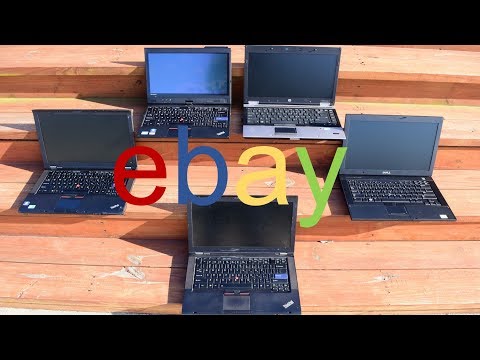
Try eBay


Maybe you find the cheapest quality laptops on eBay. But again, you need to carefully the product and seller. Make sure that you do your homework and thoroughly check the laptop before you buy. Make sure that you don't end up with a useless Monster!


Try a refurbished laptop


You can save a bundle by buying a refurbished laptop directly from the major laptop manufacturers. These laptops offer very good quality at much lower prices. To verify a refurbished laptop.


Try bargain of online stores like buy.com


You can many bargains online shops or super sites like BestBuy.com, TigerDirect.com, buy.com, and countless others to check out.

These stores can offer also refurbished laptops, but keep your eyes open for these monsters.


Try Amazon


Don't forget Amazon, now new and second-hand notebooks they sell some very competitive prices. When they say all rich uncles or aunts (related), you have an Amazon wish list... a desire for a good laptop to the top set. Laughing Hey, not - it happens!


Try Dell coupons and discounts


Recently, laptops have come after discounts or coupons Dell, HP, and a few other laptop manufacturers with $400. Laptops are these may usually to entry but perfect for students.


Don't forget haggling


If you preferred a laptop from a vendor or shop-buy questions always after a discount or bargain. Many times haggling will get thrown a better price or some beautiful climbs with a few extras in. No harm in trying.


And keep your eyes open


Purchase a good quality which cheap student laptop can be done when you try some of the above mentioned places. If you are on a strict budget, most students, you can save a lot of money by shopping around, and with the help of the advice here. Just keep in mind as you open your purse or wallet to buy, the bargain student laptop, keep your eyes open for all the monsters, the possibly

Cheap Laptop computer


A laptop computer or simply laptop (also notebook computer or notebook) is a small mobile personal computer, usually weighing from one to three kilograms, depending on size, materials and other factors.


While the terms "laptop" and "notebook" are often used interchangeably, "laptop" is the older term, introduced in 1983 with the Gavilan SC. "Notebook computer" is a later coinage, which was used to differentiate smaller devices such as those of the Compaq LTE series in 1989, which were, in contrast to previous laptops, the approximate size of an A4 paper sheet.[1] Either term is often used improperly: due to heat and other issues, many laptops are inappropriate for use on one's lap, and most are not the size of an A4 sheet. Although, some older portable computers, such as the Macintosh Portable and certain Zenith TurbosPort models, were sometimes described as "laptops", their size and weight were too great for this category.


Laptops usually run on a single battery or from an external AC/DC adapter which can charge the battery while also supplying power to the computer itself.


An Acer laptop with touchpadAs personal computers, laptops are capable of the same tasks as a desktop PC, although they are typically less powerful for the same price. They contain components that are similar to their desktop counterparts and perform the same functions, but are miniaturized and optimized for mobile use and efficient power consumption. Laptops usually have liquid crystal displays and most of them use different memory modules for their RAM (for instance, SO-DIMM in lieu of the larger DIMMs). In addition to a built-in keyboard, they may utilize a touchpad (also known as a trackpad) or a pointing stick for input, though an external keyboard or mouse can usually be attached.


Categories

Terms sometimes used for subtypes of laptop computers include:


Ultraportables

Laptops with screens typically less than 12 inches diagonally and a weight of less than 1.7kg. Their primary audience is usually business travellers, who need small, light laptops. Ultraportables are often very expensive and house power-saving CPUs and almost always have integrated graphics.

Thin-and-lights

Laptops usually weighing in between 1.8kg and 2.8kg with a screen size of between 12 and 14 inches diagonally.

Medium-sized laptops

These usually have screens of 15 - 15.4 inches diagonally and a weight of around 3-3.5kg. They usually sacrifice a little computing power for smaller dimensions and longer battery life, although the length and width are usually determined by the screen size.

Desktop replacement computers

Powerful laptops meant to be mainly used in a fixed location and infrequently carried out due to their weight and size; the latter provides more space for powerful components and a big screen, usually measuring 15 inches or more. Desktop replacements tend to have limited battery life, rarely exceeding three hours, because the hardware does not optimize power efficiency.

History

Before laptop/notebook computers were technically feasible, similar ideas had been proposed, most notably Alan Kay's Dynabook concept, developed at Xerox PARC in the early 1970s.


The first commercially available portable computer was the Osborne 1 in 1981, which used the CP/M operating system. Although it was large and heavy compared to today's laptops, with a tiny CRT monitor, it had a near-revolutionary impact on business, as professionals were able to take their computer and data with them for the first time. This and other "luggables" were inspired by what was probably the first portable computer, the Xerox NoteTaker, again developed at Xerox PARC, in 1976; however, only ten prototypes were built. The Osborne was about the size of a portable sewing machine, and importantly could be carried on a commercial aircraft. However, it was not possible to run the Osborne on batteries; it had to be plugged in.


A more enduring success was the Compaq Portable, the first product from Compaq, introduced in 1983, by which time the IBM Personal Computer had become the standard platform. Although scarcely more portable than the Osborne machines, and also requiring AC power to run, it ran MS-DOS and was the first true IBM clone (IBM's own later Portable Computer, which arrived in 1984, was notably less IBM PC-compatible than the Compaq[citation needed]).


Another significant machine announced in 1981, although first sold widely in 1983, was the Epson HX-20. A simple handheld computer, it featured a full-transit 68-key keyboard, rechargable nickel-cadmium batteries, a small (120 x 32-pixel) dot-matrix LCD display with 4 lines of text, 20 characters per line text mode, a 24 column dot matrix printer, a Microsoft BASIC interpreter, and 16 kB of RAM (expandable to 32 kB).


However, arguably the first true laptop was the GRiD Compass 1101, designed by Bill Moggridge in 1979-1980, and released in 1982. Enclosed in a magnesium case, it introduced the now familiar clamshell design, in which the flat display folded shut against the keyboard. The computer could be run from batteries, and was equipped with a 320×200-pixel plasma display and 384 kilobyte bubble memory. It was not IBM-compatible, and its high price (US$ 10,000) limited it to specialized applications. However, it was used heavily by the U.S. military, and by NASA on the Space Shuttle during the 1980s. The GRiD's manufacturer subsequently earned significant returns on its patent rights as its innovations became commonplace. GRiD Systems Corp. was later bought by Tandy (RadioShack).


Two other noteworthy early laptops were the Sharp PC-5000 and the Gavilan SC, announced in 1983 but first sold in 1984. The Gavilan was notably the first computer to be marketed as a "laptop". It was also equipped with a pioneering touchpad-like pointing device, installed on a panel above the keyboard. Like the GRiD Compass, the Gavilan and the Sharp were housed in clamshell cases, but they were partly IBM-compatible, although primarily running their own system software. Both had LCD displays, and could connect to optional external printers.


The year 1983 also saw the launch of what was probably the biggest-selling early laptop, the Kyocera Kyotronic 85, which owed much to the design of the previous Epson HX-20. Although it was at first a slow seller in Japan, it was quickly licensed by Tandy Corporation, Olivetti, and NEC, which saw its potential and marketed it respectively as TRS-80 Model 100 line (or Tandy 100), Olivetti M-10, NEC PC-8201.[2] The machines ran on standard AA batteries. The Tandy's built-in programs, including a BASIC interpreter, a text editor, and a terminal program, were supplied by Microsoft, and are thought to have been written in part by Bill Gates himself. The computer was not a clamshell, but provided a tiltable 8×40-character LCD screen above a full-travel keyboard. With its internal modem, it was a highly portable communications terminal. Due to its portability, good battery life (and ease of replacement), reliability (it had no moving parts), and low price (as little as US$ 300), the model was highly regarded, becoming a favorite among journalists. It weighed less than 2 kg with dimensions of 30 × 21.5 × 4.5 cm (12 × 8.5 × 1.75 inches). Initial specifications included 8 kilobyte of RAM (expandable to 24 kB) and a 3 MHz processor. The machine was in fact about the size of a paper notebook, but the term had yet to come into use and it was generally described as a "portable" computer.


Among the first commercial IBM-compatible laptops were the IBM PC Convertible, introduced in 1986, and two Toshiba models, the T1000 and T1200, introduced in 1987. Although limited floppy-based DOS machines, with the operating system stored in read-only memory, the Toshiba models were small and light enough to be carried in a backpack, and could be run off lead-acid batteries. These also introduced the now-standard "resume" feature to DOS-based machines: the computer could be paused between sessions, without having to be restarted each time.


The first laptops successful on a large scale came in large part due to a Request For Proposal (RFP) by the U.S. Air Force in 1987. This contract would eventually lead to the purchase of over 200,000 laptops. Competition to supply this contract was fiercely contested and the major PC companies of the time; IBM, Toshiba, Compaq, NEC, and Zenith Data Systems (ZDS), rushed to develop laptops in an attempt to win this deal. ZDS, which had earlier won a landmark deal with the IRS for its Z-171, was awarded this contract for its SupersPort series. The SupersPort series was originally launched with an Intel 8086 processor, dual floppy disk drives, a backlit, blue and white STN LCD screen, and a NiCD battery pack. Later models featured an Intel 80286 processor and a 20MB hard disk drive. On the strength of this deal, ZDS became the world's largest laptop supplier in 1987 and 1988.


ZDS partnered with Tottori Sanyo in the design and manufacturing of these laptops. This relationship is notable because it was the first deal between a major brand and an Asian OEM (Original Equipment Manufacturer). At the time, Compaq, IBM, Toshiba, NEC, etc. all designed and manufactured their own machines. However, after the success of the ZDS offering other relationships, like Compaq and Citizen, soon followed. At this time the quality of Japanese engineering and manufacturing in conjunction with the strength of the dollar relative to the yen (typically about 130 Yen = $1) drove most brands to suppliers in Japan. Companies such as Sanyo, Tottori Sanyo, Citizen, and Casio were all heavily involved in this business as OEMs. However, by the mid-1990s a weakening dollar and the rising viability of Taiwanese OEMs such as Acer, Quanta, Compal, Twinhead, and Chicony lead the supply base to rapidly shift from Japan to Taiwan. Additionally, brands which were more nimble and relied less on internal engineering such as Gateway, Dell and Micron began to rise quickly to leadership positions. Combinations such as Dell/Compal and Gateway/Quanta eventually became powerhouse partnerships and greatly contributed to the prominence of Taiwanese OEMs as the center of PC manufacturing from about 1995 onward.


Another notable computer was the Cambridge Z88, designed by Clive Sinclair, introduced in 1988. About the size of an A4 sheet of paper as well, it ran on standard batteries, and contained basic spreadsheet, word processing, and communications programs. It anticipated the future miniaturization of the portable computer; and, as a ROM-based machine with a small display, can -- like the TRS-80 Model 100 -- also be seen as a forerunner of the personal digital assistant.


By the end of the 1980s, laptop computers were becoming popular among business people. The NEC Ultralite, released in mid-1989, was perhaps the first notebook computer, weighing just over 2 kg; in lieu of a floppy or hard drive, it contained a 2 megabyte RAM drive, but this reduced its utility as well as its size. The first notebook computers to include hard drives were those of the Compaq LTE series, introduced toward the end of that year. Truly the size of a notebook, they also featured backlit displays with CGA resolutions (though not CGA colors).


The Macintosh Portable, Apple's first attempt at a battery-powered computerThe first Apple Computer machine designed to be used on the go was the 1989 Macintosh Portable (although an LCD screen had been an option for the transportable Apple IIc in 1984). Actually a "luggable", the Mac Portable was praised for its clear active matrix display and long battery life, but was a poor seller due to its bulk. In the absence of a true Apple laptop, several compatible machines such as the Outbound Laptop were available for Mac users; however, for copyright reasons, the user had to supply a set of Mac ROMs, which usually meant having to buy a new or used Macintosh as well.


The Apple PowerBook series, introduced in October 1991, pioneered changes that are now de facto standards on laptops, such as the placement of the keyboard, room for palm rest, and the inclusion of a built-in pointing device (a trackball). The following year, IBM released its Thinkpad 700C, featuring a similar design (though with a distinctive red TrackPoint pointing device).


Later PowerBooks introduced the first 256-color displays (PowerBook 165c, 1993), and first true touchpad, first 16-bit sound recording, and first built-in Ethernet network adapter (PowerBook 500, 1994).


The summer of 1995 was a significant turning point in the history of notebook computing. In August of that year Microsoft introduced Windows 95. It was the first time that Microsoft had placed much of the power management control in the operating system. Prior to this point each brand used custom BIOS, drivers and in some cases, ASICs, to optimize the battery life of its machines. This move by Microsoft was controversial in the eyes of notebook designers because it greatly reduced their ability to innovate; however, it did serve its role in simplifying and stabilizing certain aspects of notebook design. Windows 95 also ushered in the importance of the CD-ROM in mobile computing and initiated the shift to the Intel Pentium processor as the base platform for notebooks. The Gateway Solo was the first notebook introduced with a Pentium processor and a CD-ROM. By also featuring a removeable hard disk drive and floppy drive it was the first three-spindle (optical, floppy, and hard disk drive) notebook computer. The Gateway Solo was extremely successful within the consumer segment of the market. In roughly the same time period the Dell Latitude, Toshiba Satellite, and IBM Thinkpad were reaching great success with Pentium-based two-spindle (hard disk and floppy disk drive) systems directed toward the corporate market.


An old (1997) Micron laptopAs technology improved during the 1990s, the usefulness and popularity of laptops increased. Correspondingly prices went down. Several developments specific to laptops were quickly implemented, improving usability and performance. Among them were:

Improved battery technology. The heavy lead-acid batteries were replaced with lighter and more efficient technologies, first nickel cadmium or NiCD, then nickel metal hydride (NiMH) and then lithium ion battery and lithium polymer. Power-saving processors. While laptops in 1991 were limited to the 80286 processor because of the energy demands of the more powerful 80386, the introduction of the Intel 386SL processor, designed for the specific power needs of laptops, marked the point at which laptop needs were included in CPU design. The 386SL integrated a 386SX core with a memory controller and this was paired with an I/O chip to create the SL chipset. It was more integrated than any previous solution although its cost was higher. It was heavily adopted by the major notebook brands of the time. Intel followed this with the 486SL chipset which used the same architecture. However, Intel had to abandon this design approach as it introduced its Pentium series. Early versions of the mobile Pentium required TAB mounting (also used in LCD manufacturing) and this initially limited the number of companies capable of supplying notebooks. However, Intel did eventually migrate to more standard chip packaging. One limitation of notebooks has always been the difficulty in upgrading the processor which is a common attribute of desktops. Intel did try to solve this problem with the introduction of the MMC for mobile computing. The MMC was a standard module upon which the CPU and external cache memory could sit. It gave the notebook buyer the potential to upgrade his CPU at a later date, eased the manufacturing process some, and was also used in some cases to skirt U.S. import duties as the CPU could be added to the chassis after it arrived in the U.S. Intel stuck with MMC for a few generations but ultimately could not maintain the appropriate speed and data integrity to the memory subsystem through the MMC connector. Improved liquid crystal displays, in particular active-matrix TFT (Thin-Flim Transitor) LCD technology. Early laptop screens were black and white, blue and white, or grayscale, STN (Super Twist Nematic) passive-matrix LCDs prone to heavy shadows, ghosting and blurry movement (some portable computer screens were sharper monochrome plasma displays, but these drew too much current to be powered by batteries). Color STN screens were used for some time although their viewing quality was poor. By about 1991 , two new color LCD techologies hit the mainstream market in a big way; Dual STN and TFT. The Dual STN screens solved many of the viewing problems of STN at a very affordable price and the TFT screens offered excellent viewing quality although initially at a steep price. DSTN continued to offer a significant cost advantage over TFT until the mid-90s before the cost delta dropped to the point that DSTN was no longer used in notebooks. Improvements in production technology meant displays became larger, sharper, had higher native resolutions, faster response time and could display color with great accuracy, making them an acceptable substitute for a traditional CRT monitor. Improved hard disk technology. Early laptops and portables had only floppy disk drives. As thin, high-capacity hard disk drives with higher reliability and shock resistance and lower power consumption became available, users could store their work on laptop computers and take it with them. The 3.5" HDD was created initially as a response to the needs of notebook designers that needed smaller, lower power consumption products. As pressure to continue to shrink the notebook size even further, the 2.5" HDD was introduced. Improved connectivity. Internal modems and standard serial, parallel, and PS/2 ports on IBM PC-compatible laptops made it easier to work away from home; the addition of network adapters and, from 1997, USB, as well as, from 1999, Wi-Fi, made laptops as easy to use with peripherals as a desktop computer.

The $100 laptop


A first generation prototype of the $100 laptop

In 2005, faculty members from the MIT Media Lab including Nicholas Negroponte introduced the $100 laptop and the One Laptop Per Child project. The aim is to design, manufacture, and distribute laptops that are sufficiently inexpensive to provide every child in the world access to knowledge and modern forms of education. The laptops are to be sold to governments and issued to children by schools. These equipments, of which many prototypes have already been presented, will be rugged, Linux-based, and so energy efficient that a hand-cranking dynamo can alone provide sufficient power for operation (although this hand-crank has since been removed). Ad-hoc wireless mesh networking may be used to allow many machines to share a single Internet connection.